Tasmanian Gothic
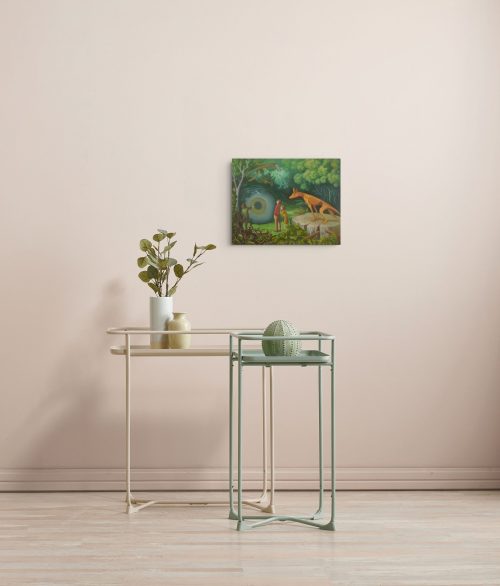
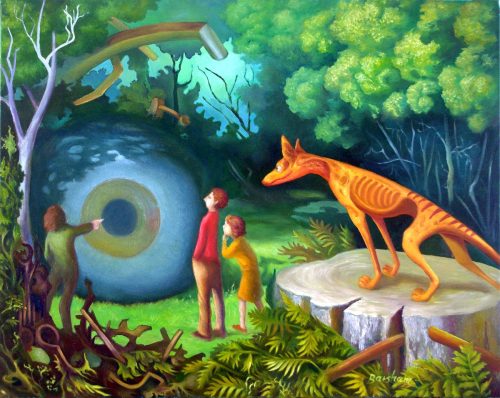
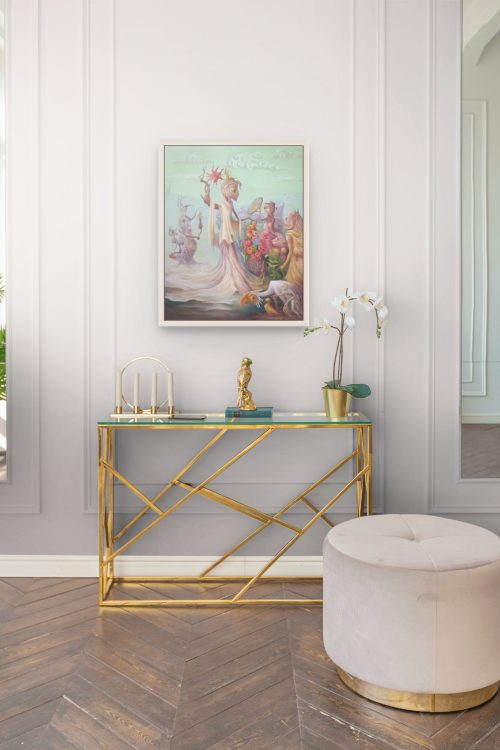
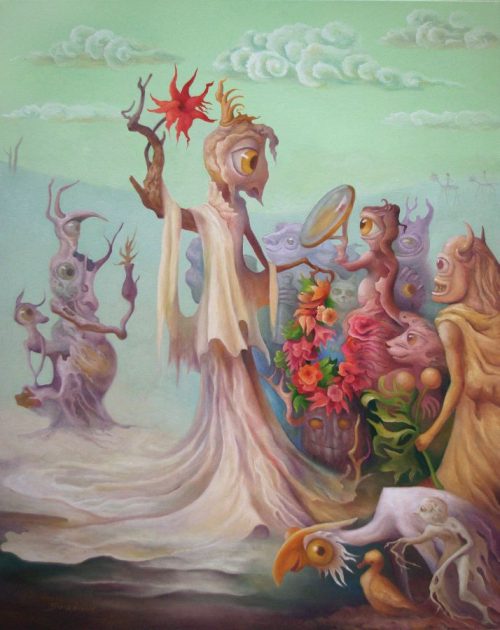
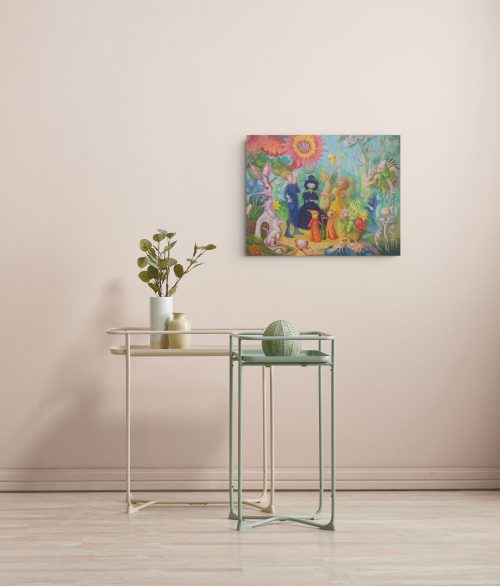
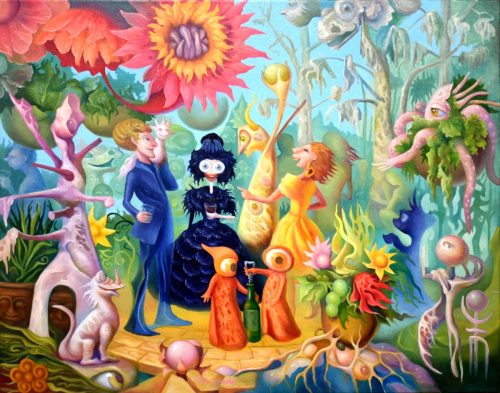
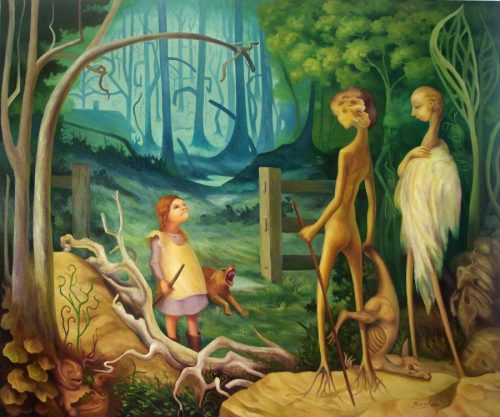
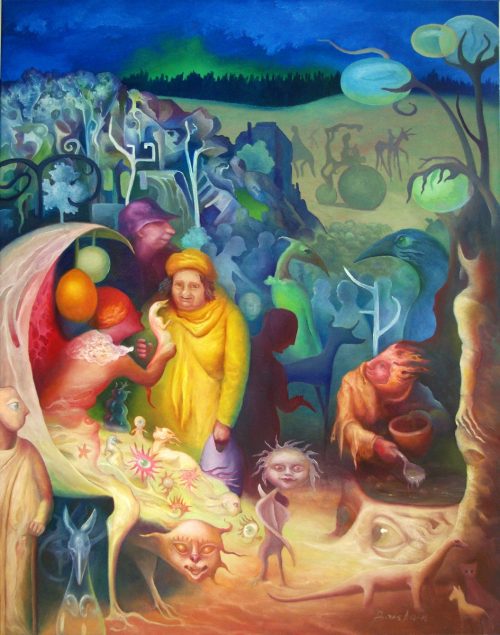
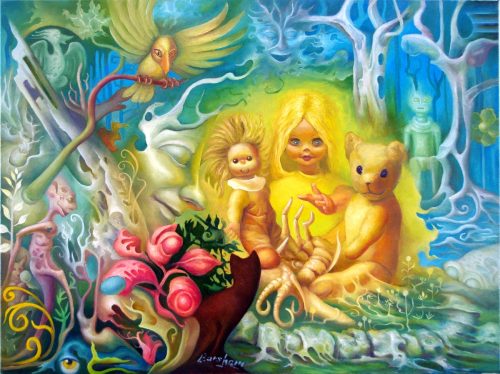
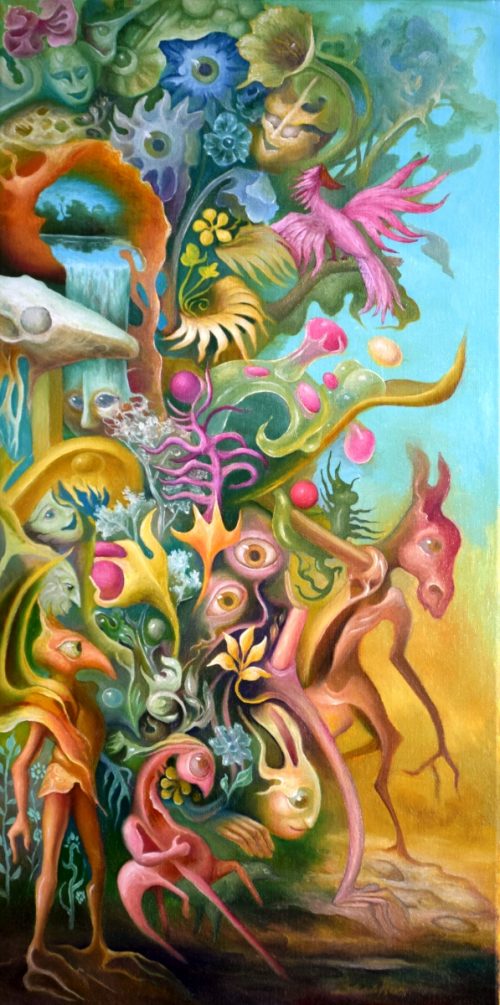
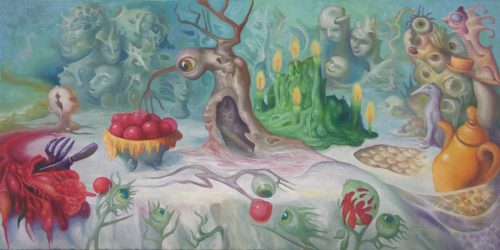
Looking at Elizabeth Barsham’s paintings is a bit like looking at an Hieronymus Bosch altarpiece. Strange forms, gemlike colours and bizarre landscape peopled by morphic lifeforms spin a weird narrative. This Tasmanian story seems as impenetrable as Bosch’s 16th century Dutch religious painting seems to us now. However, if you are a Tasmanian with access to local lore things seem clearer, if not less strange.
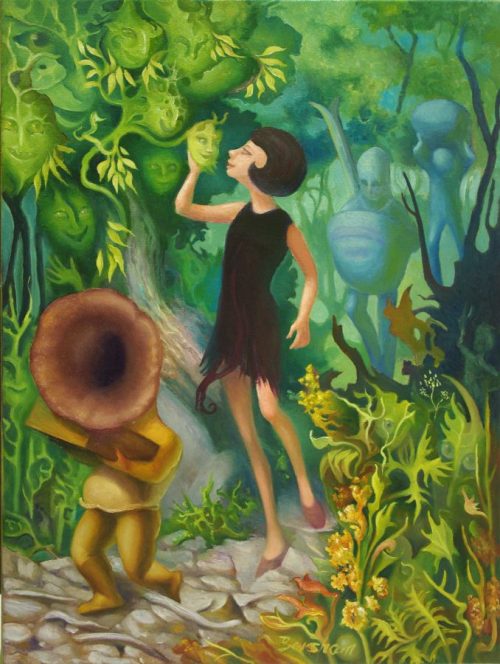
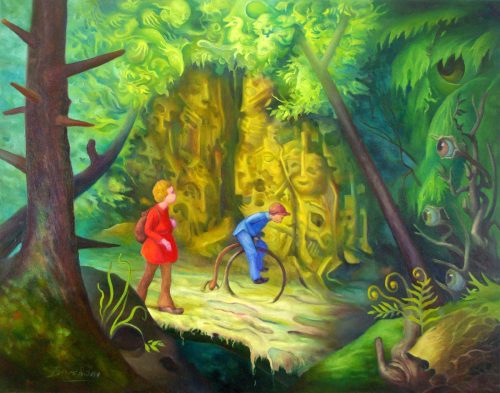
Here is Miss Barsham explanation for Track to Twilight Tarn;
“Track to Twilight Tarn” has a story behind it – back in the 1920s/30s enthusiastic people would catch the train to National Park after work on Friday night, hike in to the hut at Twilight Tarn in Mt Field National Park and spend the weekend partying, skating on the tarn, dancing, and ski-ing before returning to Hobart on Sunday evening ready for work on Monday. In those days winters were cold enough for the tarn to freeze over and the park to get a good covering of snow. They would arrange for pack-men to take their gear, including gramophone and records, evening clothes, utensils and gourmet food as well as sensible ski and skating clothing, up during the day so it was all ready waiting for them when they arrived. They probably weren’t dressed quite like this. We still sometimes walk along the old pack-track from Lake Fenton to Twilight Tarn.
Many of the paintings in this exhibition are familiar places informed by vigorous bushwalking and local narratives as the artist is from an old settler family
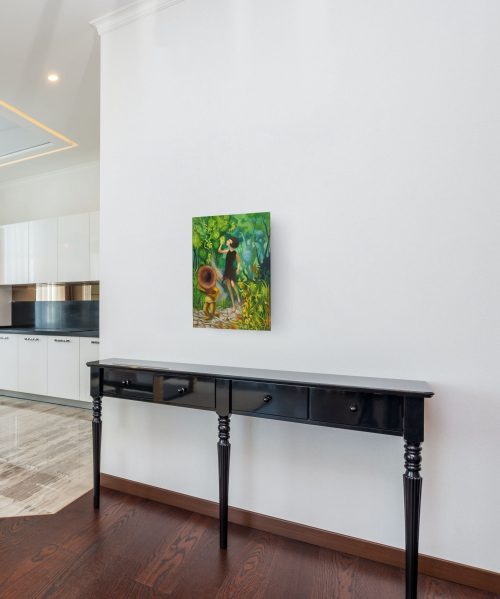
“Admiring the Relics” and “The Way to the Waterfall” were painted after a week exploring on the west coast, visiting old mine sites and hiking to Montezuma Falls.
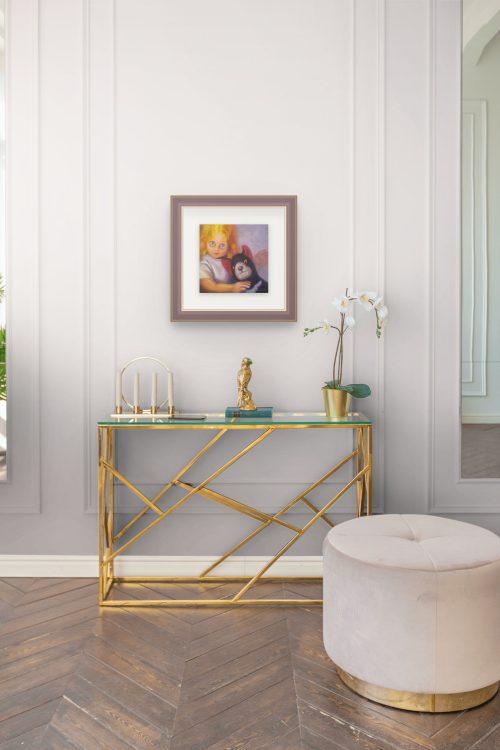
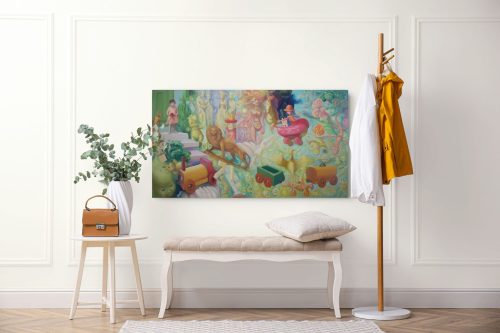
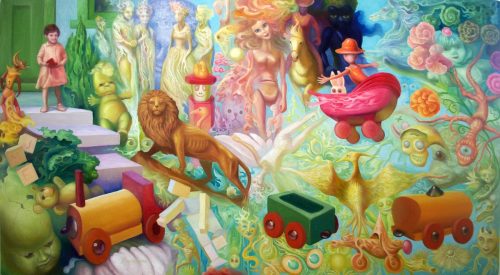
“Scenes from Childhood” is based on a transcription from her mother’s diaries from the days when the artist was very young, the toys mostly dating from that period ( the wooden train is particularly important).
However, its best to avoid ascribing clear meanings to the work as this glorious colourful painting is tricky and often largely confected. Tasmanian Gothic is like that. The past comes to haunt the present, the artist wears walking boots and there is always a sting in the tail.